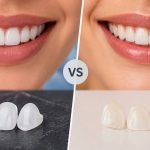

If you are thinking about improving your smile, veneers are one of the most popular options available today. They cover the front surface of your teeth and can transform the way your smile looks in a relatively short time. But one question comes up again and again—which is better, composite or porcelain veneers? The answer depends on your goals, your budget, and your individual dental situation. If you are looking for a dentist near you who can walk you through both options honestly, this guide is a great starting point.
What Are Cosmetic Veneers?
Cosmetic veneers are thin shells that are bonded to the front surface of your teeth. They are used to improve the appearance of teeth that are
- Discoloured or marked
- Chipped or slightly fractured
- Of varying shapes or irregularity
- Gapped slightly, not perfectly straight.
- Wearing of the edges/surface over the years
Veneers do not fix structural damage or serious alignment issues. But for cosmetic concerns, they are one of the most effective solutions available.
There are two main types — composite veneers and porcelain veneers. Both improve the look of your smile, but they work quite differently.
What Are Composite Veneers?
Composite veneers are made from a tooth-coloured resin material—the same material used in dental bonding. They are applied directly onto the tooth surface by your dentist, shaped by hand, and hardened using a special light.
If you are exploring cosmetic veneers near you, composite veneers are often the first option discussed because of how accessible and straightforward they are.
Here is what makes composite veneers stand out:
- They are usually completed in a single appointment
- No laboratory work is needed—everything is done chairside
- Less tooth enamel needs to be removed beforehand
- They cost significantly less than porcelain veneers
- They are easy to repair if chipped or damaged
- The results are visible immediately after your appointment
Composite veneers are a good choice for patients who want a noticeable improvement without a long process or a large financial commitment.
What Are Porcelain Veneers?
Porcelain veneers are thin ceramic shells that are custom-made in a dental laboratory to fit your teeth precisely. Because they are fabricated outside the clinic, the process usually takes two or more appointments.
Here is how the process typically works:
- Consultation and planning—your dentist assesses your teeth and discusses your goals
- Tooth preparation — a small amount of enamel is removed from the tooth surface to make room for the veneer
- Impressions or digital scan — a precise mould of your teeth is sent to the laboratory
- Temporary veneers—these are placed while your permanent ones are being made
- Bonding appointment — the finished porcelain veneers are checked for fit and colour, then bonded permanently
Porcelain veneers are widely considered the premium option for smile transformation — and for good reason.
Composite vs Porcelain Veneers—A Clear Comparison
Here is a simple side-by-side look at both options:
| Factor | Composite Veneers | Porcelain Veneers |
| Material | Tooth-coloured resin | Custom-made ceramic |
| Number of appointments | Usually one | Two or more |
| Appearance | Natural-looking | Highly realistic and translucent |
| Stain resistance | Moderate — can stain over time | Excellent—highly stain resistant |
| Durability | 5 to 7 years with care | 10 to 15 years or more |
| Repairability | Easy to repair | Difficult to repair—usually replaced |
| Tooth preparation | Minimal | Some enamel removal is required |
| Cost | More affordable | Higher investment |
| Best suited for | Mild cosmetic concerns, budget-conscious patients | Significant cosmetic concerns, long-term results |
Neither option is universally better. The right choice depends entirely on what you are hoping to achieve and what suits your lifestyle and budget.
Which One Looks More Natural?
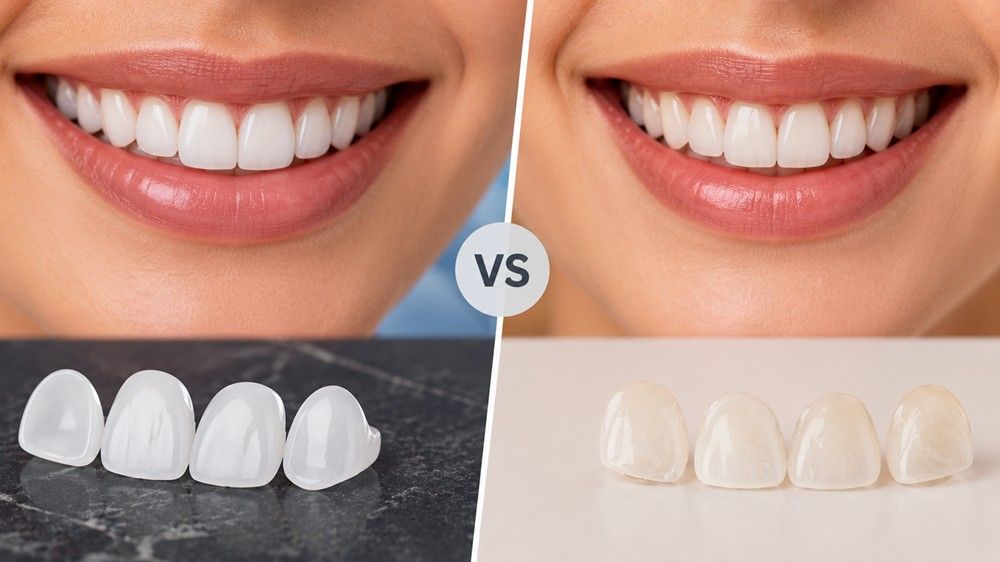
Both composite and porcelain veneers can produce beautiful, natural-looking results when placed by a skilled dentist. However, there is a difference in the quality of appearance.
Porcelain has a translucency that closely mimics natural tooth enamel. Light passes through it in a way that looks very lifelike. This makes porcelain veneers particularly impressive for larger smile makeovers where several teeth are being treated at once.
Composite veneers look very good—especially when freshly placed. However, the resin material does not have the same light-reflecting quality as porcelain, and it can pick up staining from coffee, tea, and red wine more easily over time.
For patients looking for the most realistic and long-lasting aesthetic result, porcelain is generally considered the superior option in terms of appearance.
Which One Is More Affordable?
Cost is a significant factor for many patients—and this is where composite veneers have a clear advantage.
Composite veneers are considerably less expensive than porcelain veneers. Because they are completed in a single appointment with no laboratory fees involved, the overall cost is much lower.
Porcelain veneers require more time, laboratory fabrication, and specialist skill — which is reflected in the price. However, their longer lifespan means the cost per year of use can be more comparable over time.
If budget is a primary concern, composite veneers offer a meaningful cosmetic improvement at a much more accessible price point.
Which Option Lasts Longer?
Longevity is another important factor to consider.
Porcelain veneers, with proper care, can last 10 to 15 years or longer. They are resistant to staining and hold their appearance well over time. When they do eventually need replacing, the process starts again from scratch.
Composite veneers typically last 5 to 7 years. They are more prone to chipping and staining over time. However, repairs are simple — your dentist can fix a chipped composite veneer quickly and affordably in a single visit.
For patients who want a long-term, low-maintenance cosmetic solution, porcelain veneers offer a stronger return on investment over time.
Can Veneers Be Combined?
Yes—and this is an option some patients choose. In some cases, a dentist may recommend porcelain veneers for the most visible front teeth and composite veneers for less prominent teeth. This approach balances aesthetics with cost.
Your dentist will discuss what makes the most sense for your specific smile and goals during your consultation.
Who Is a Good Candidate for Veneers?
Both types of veneers work best for patients who:
- Have healthy teeth and gums with no active decay or gum disease
- Are looking to improve the cosmetic appearance of their smile
- Have realistic expectations about the outcome
- Are committed to good oral hygiene and regular dental visits
- Do not grind their teeth heavily, or are willing to wear a night guard
If decay or gum disease is present, it needs to be treated before any veneers are placed.
Your Best Smile Is Closer Than You Think
Both composite and porcelain veneers can genuinely transform the way your smile looks and how you feel about it. The right choice comes down to your goals, your timeline, and your budget — and a good dentist will help you weigh all of those factors clearly and honestly.
At the University Edmonton Dental Choice, your desires regarding your smile are truly cared about. Their friendly and experienced team is available to make sure you feel completely informed and that you can ask all the questions you want while building the treatment plan that is suitable for you. Schedule an appointment for a consultation with us today and be on your way to achieving the smile you have always dreamed of.
Frequently Asked Questions
Q1. Do veneers damage your natural teeth?
Composite veneers require very little to no enamel removal. Porcelain veneers require a small amount of enamel to be removed—this is permanent, so the decision should be made carefully with your dentist.
Q2. Can veneers fix crooked teeth?
Veneers can improve the appearance of mildly misaligned teeth—but for significant crowding or alignment issues, orthodontic treatment is usually the more appropriate solution.
Q3. How do I care for my veneers after they are placed?
Care for veneers just like natural teeth—brush twice daily, floss regularly, avoid biting on very hard objects, and attend regular dental checkups and cleanings.
Q4. Will my veneers match the colour of my other teeth?
Yes, your dentist carefully matches the shade of your veneers to your surrounding teeth so that the result looks natural and consistent.